Traditional Leatherworking: The Hand Tools That Still Matter
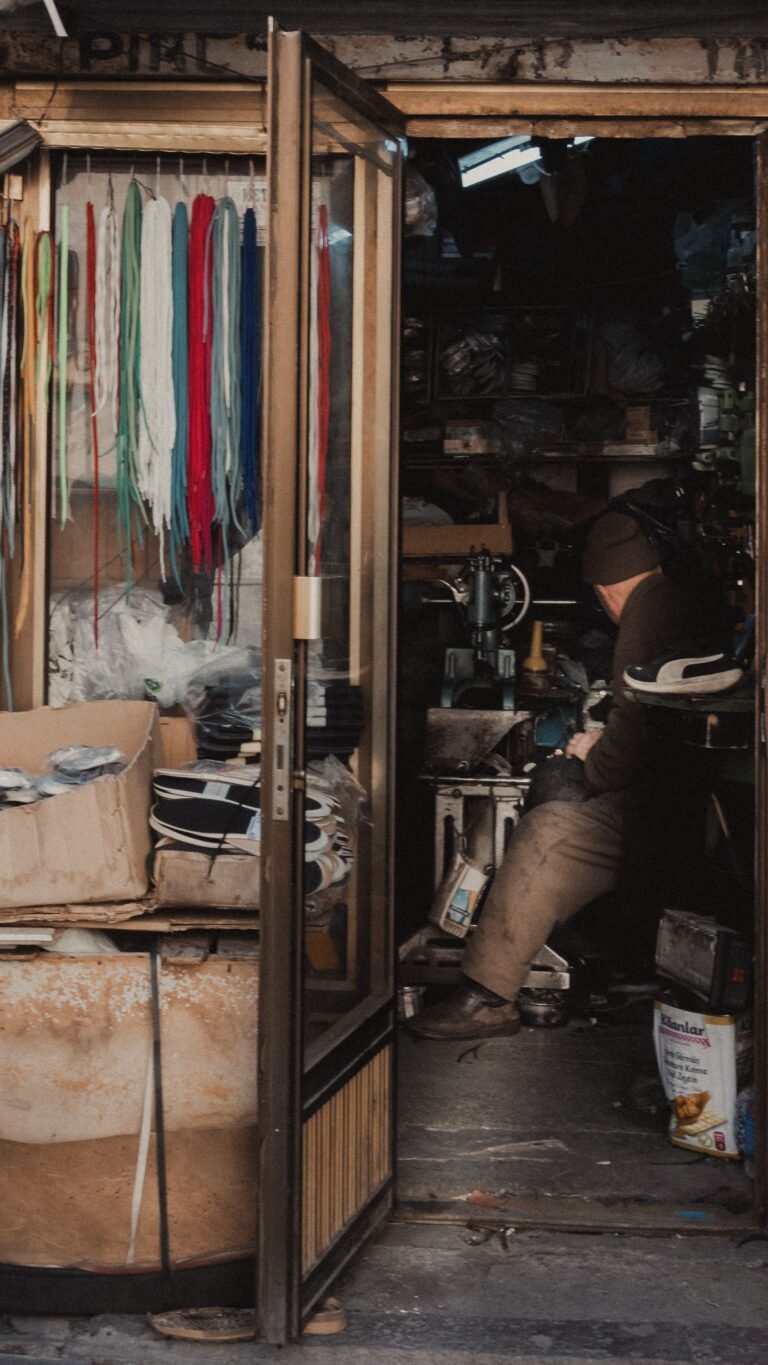
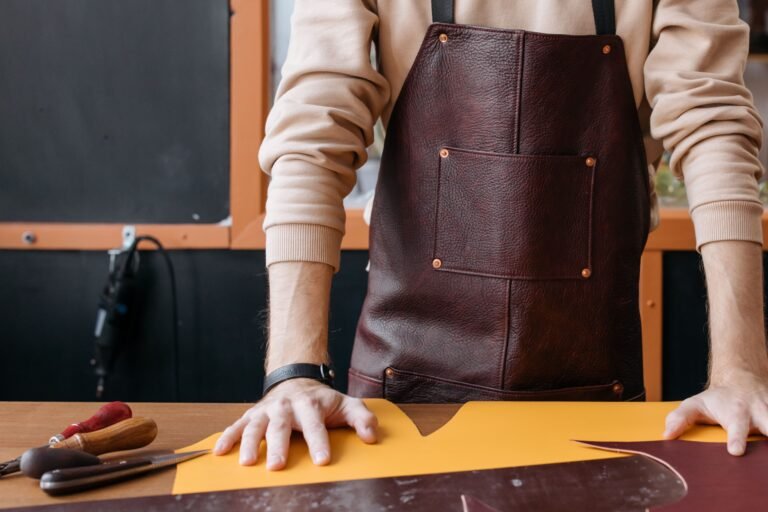
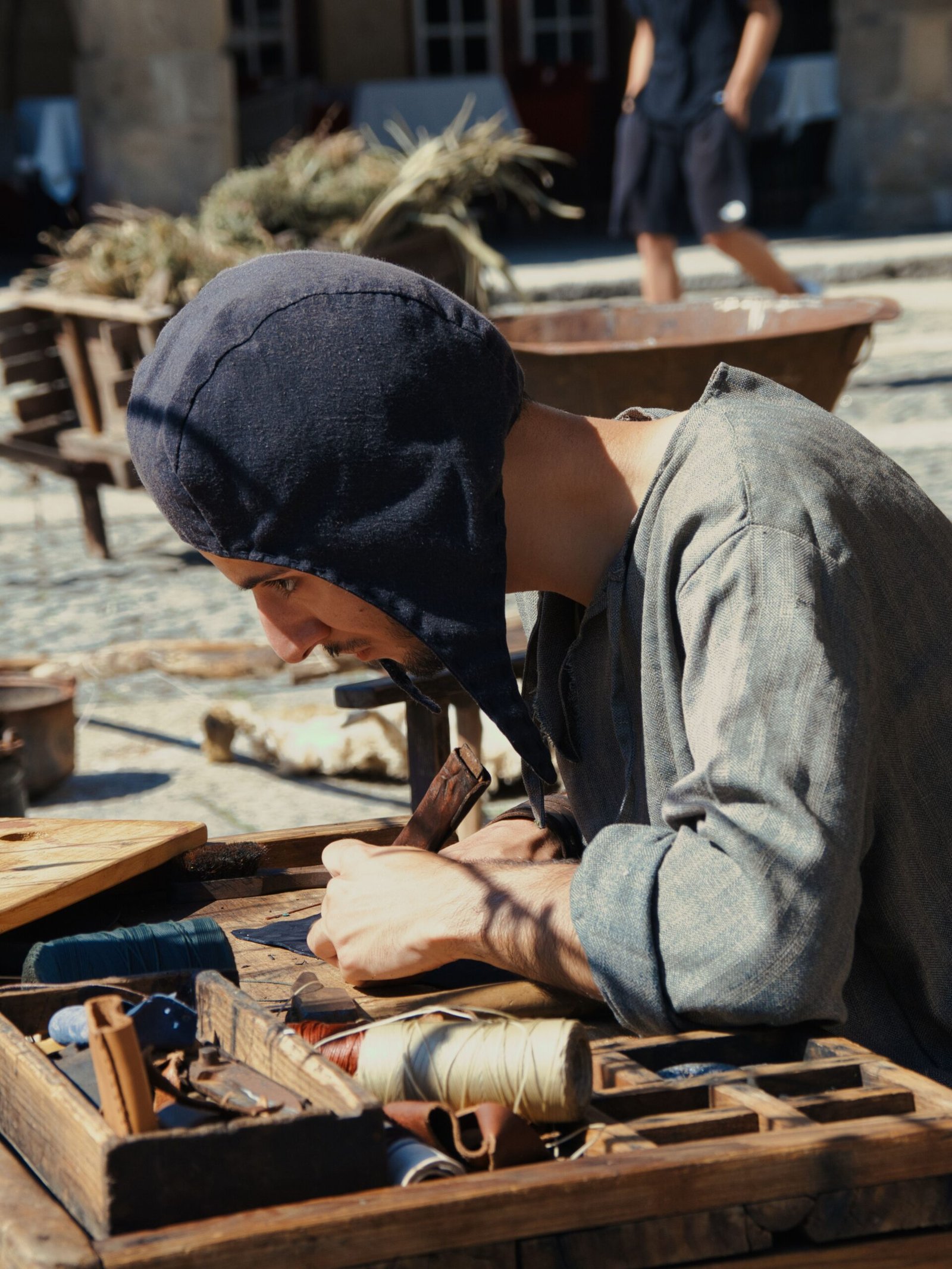
Walk into a leather workshop today and you will find machines. Walk into the same workshop and look at the bench where the best pieces are actually finished, and you will find tools that would be perfectly familiar to a craftsman from four hundred years ago. Traditional leatherworking did not survive out of sentiment.
Why traditional leatherworking kept its hand tools
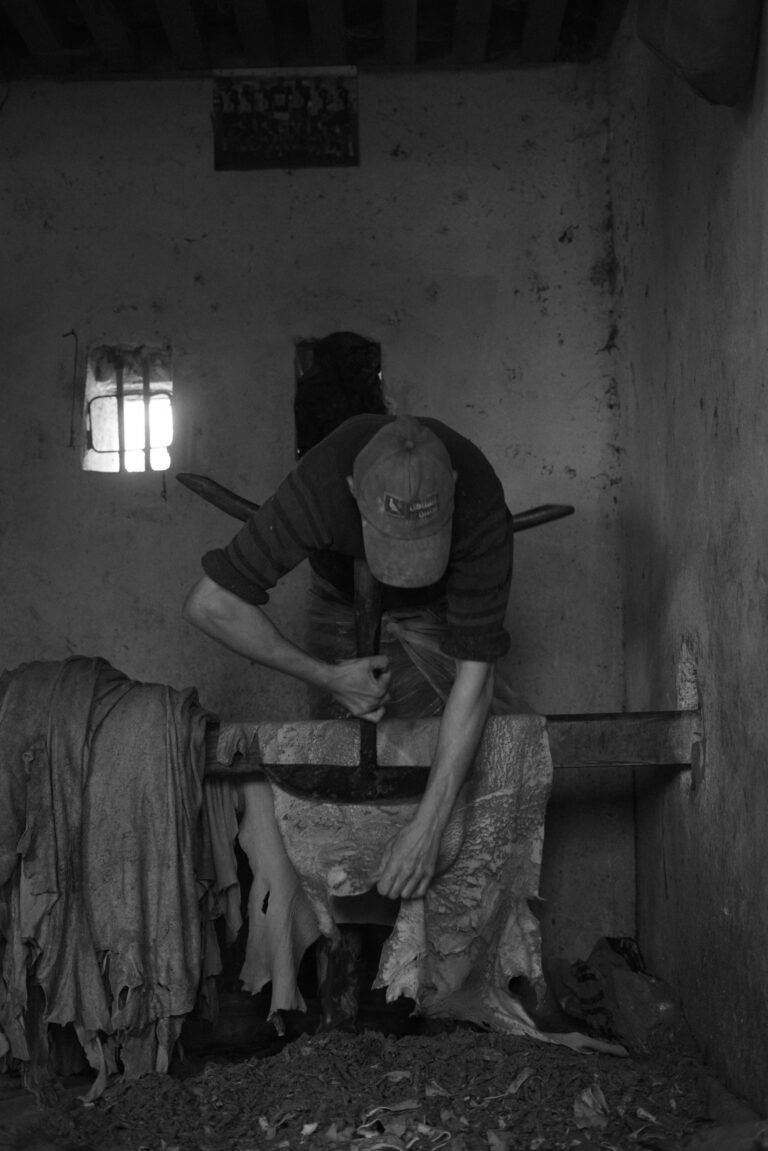
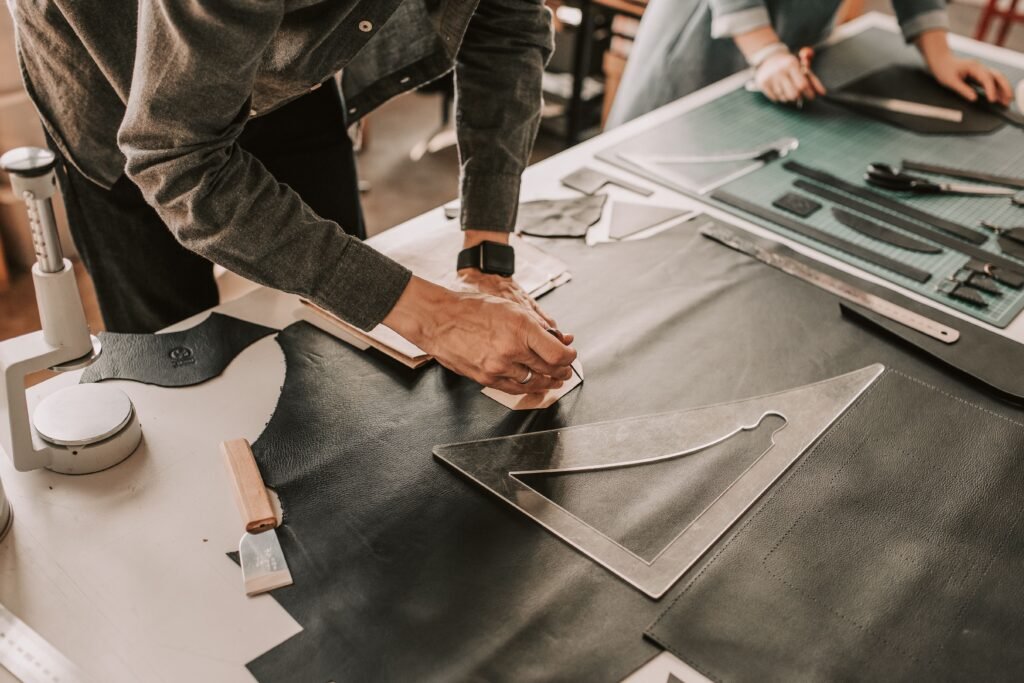
Leather is not a predictable material. It varies in thickness across a single hide, it stretches in one direction more than another, and it responds to moisture. A machine applies the same force everywhere. A hand adjusts — and on a hide where one end is a millimetre thicker than the other, that adjustment is the difference between a clean edge and a ruined panel.
The core kit: six tools
- The diamond awl — pierces an angled hole rather than a round one, which is what gives hand-stitched leather its slanted, rope-like stitch line.
- Pricking irons or a stitching chisel — mark the stitch spacing evenly. Spacing is measured in stitches per inch; 7 to 9 SPI is typical for wallets, 5 to 6 for bags and belts.
- Waxed linen or polyester thread — used with two needles in a saddle stitch, where each hole is passed twice in opposite directions.
- The wooden slicker — friction and a little water or gum tragacanth turn a raw edge into a smooth, sealed one.
- The head knife — one blade for cutting, skiving and trimming.
- The mallet or maul — tapered and weighted so the force lands square, driving irons through thick hide without bruising the grain.
Six tools and a cutting surface will make almost anything. Traditional leatherworking is unusual that way: the barrier to entry is skill, not equipment.
The saddle stitch, and why it is not just tradition
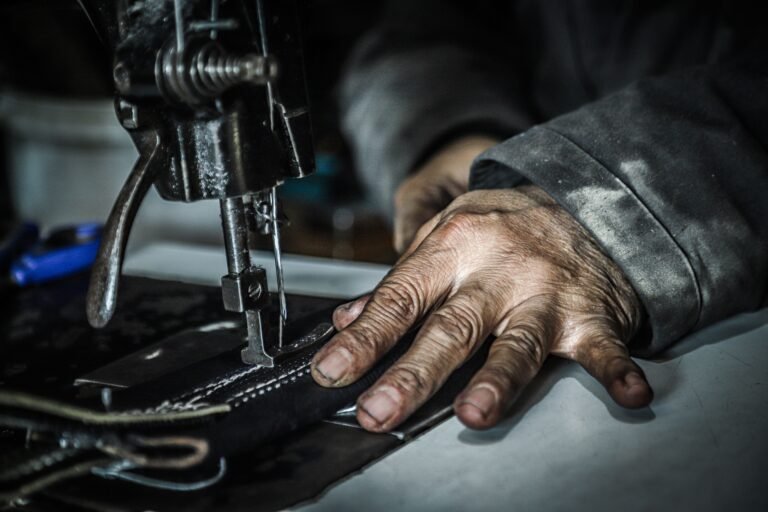
A machine lockstitch uses one thread pulled through a loop of another. Cut it in one place and the seam can unravel along its length. A saddle stitch locks each hole independently with two separate thread paths. Cut one stitch and the rest hold. This is not nostalgia; it is why hand-stitched straps outlive machine-stitched ones — the full comparison is in hand stitching versus machine stitching.
The material the tools were designed for
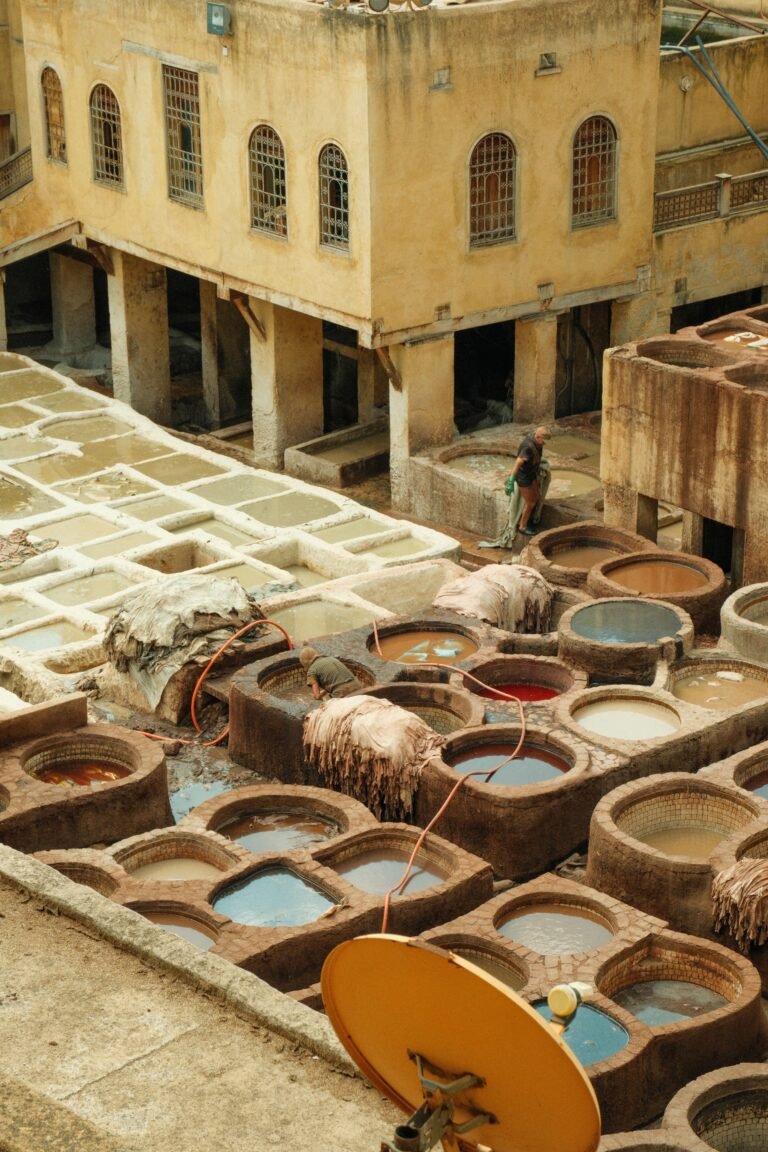
Every one of these tools assumes firm, pit-tanned vegetable leather. An awl needs a hide dense enough to hold the angled hole open; a slicker needs an edge with enough body to burnish; a head knife needs resistance to cut cleanly. Chrome-tanned leather is softer and does none of those things well, which is why traditional leatherworking still depends on the slow work of a traditional tannery. Tanneries operating to audited environmental standards are listed by the Leather Working Group.
Learning order
Start with a simple card holder: two panels, four edges, one stitch line. It teaches cutting, edge finishing, hole spacing and stitching in a single evening, and the mistakes are cheap. Move to a belt next, then a lined pouch, then anything with a gusset.
Buy the irons before the awl and the knife before the machine. In traditional leatherworking the tools that decide quality are the cheapest ones on the bench.
How to recognise the work
Slanted stitches, burnished edges with a slight sheen, and a cut edge that shows fibre rather than a plastic film — those three signs separate hand work from a factory finish, and they are the same signs used to spot real leather in a shop. If a maker hand-stitches, they will say so; if you are buying without touching the piece, put the question on your online buying checklist. Work made this way is also worth maintaining — our leather care guides cover the routine.