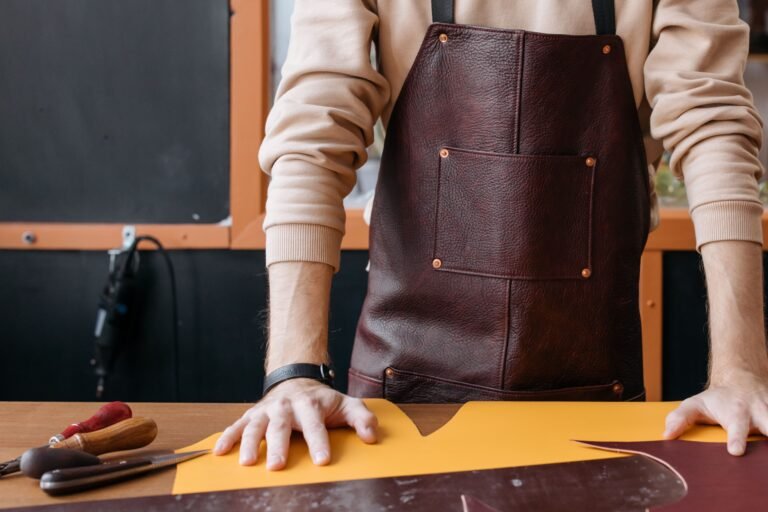
Leather Dyeing Explained: From Tanning Pits to Finished Colour
The colour of a leather item tells you more about how it was made than almost anything else about it. Dye that sits inside the fibre ages one way. Pigment sprayed on top ages another way entirely. Understanding leather dyeing is the shortest route to predicting how a bag, jacket or pair of boots will look in five years.
Dye versus pigment
Aniline dye is transparent and penetrates the leather. The natural grain, the scars and the pores all remain visible. The leather breathes, darkens with use, and develops patina. It also stains easily and fades in strong sunlight.
Pigment finish is an opaque coloured coating on the surface. It is uniform, hard-wearing and easy to clean. It also hides the grain completely, and when it eventually wears through it does so as a visible scuff rather than a soft change of tone.
Semi-aniline sits between the two: dyed through, with a light protective topcoat. It is the compromise most mid-priced furniture and footwear uses, and for most people it is the sensible one.
Where the colour actually goes
Leather dyeing is not painting. A hide is a three-dimensional web of collagen fibres, and dye travels into that web rather than sitting on it. How far it travels is the whole story. A drum-dyed hide is tumbled in a rotating vessel until the colour reaches the core, so a deep scratch exposes more of the same shade. A surface-dyed or pigmented hide carries its colour in the top fraction of a millimetre, so the same scratch shows the pale layer underneath.
This is why cut edges are so useful when you are judging a piece. Our guide to spotting real leather uses the same cross-section, for the same reason.
How leather dyeing is done traditionally
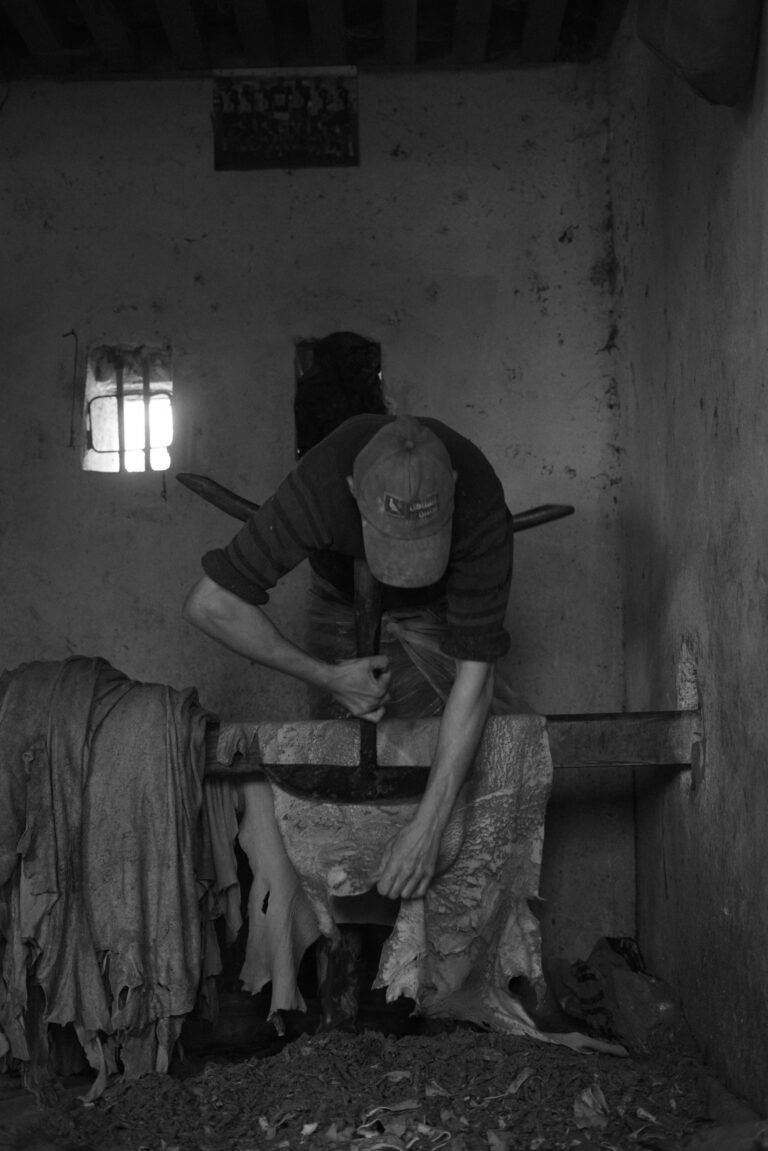
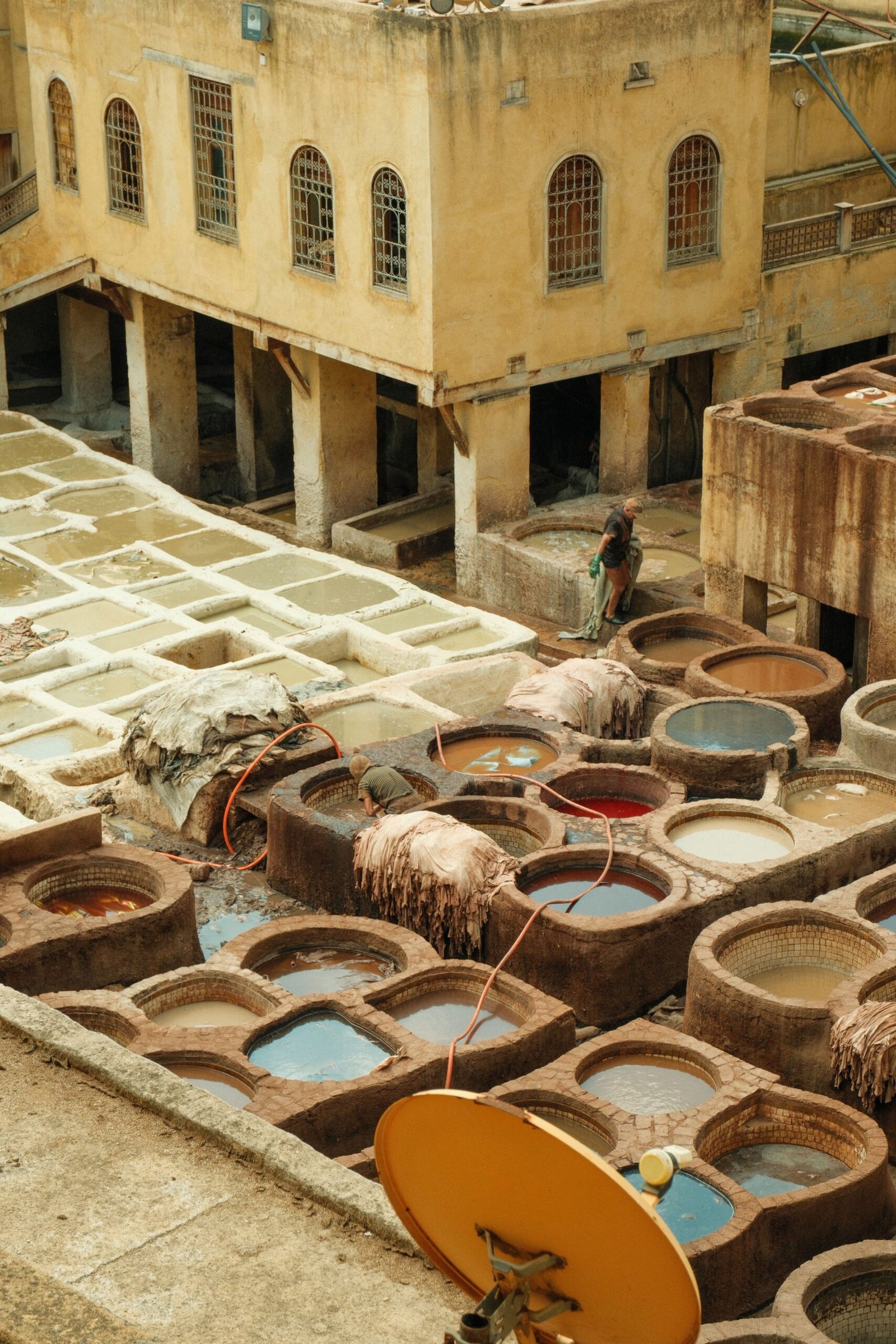
In pit tanneries the hides are moved by hand between stone vats. Each vat holds a different bath — tannin liquors first, then dye. The leather is worked, turned and pressed so the liquid reaches every part of the fibre structure. Time in the vat, temperature and the concentration of the bath all change the final shade, which is why two batches from the same tannery are never quite identical.
That variation is not a defect. Traditional leather dyeing produces a range rather than a colour, and workshops sort hides into batches so that the two halves of a bag match each other. If you want the rest of that process, what happens inside a tannery covers the stages before the dye vat. Modern tanneries doing the same work under audited chemical management are listed by the Leather Working Group.
What this means for care
- Aniline leather: keep it out of prolonged direct sun, blot spills immediately, condition regularly, and accept that it will change colour. That is the point.
- Pigmented leather: wipe with a damp cloth, use a cleaner made for finished leather, and avoid solvents that soften the topcoat.
- Either one: never use household soap, alcohol wipes or “all-purpose” cleaner.
The mistake people make is treating leather dyeing as cosmetic and buying whichever conditioner is nearest. A heavy oil on a pigmented finish sits on the surface and attracts dirt; the same oil on aniline soaks in and does exactly what it should. Our leather care guides split the routines accordingly.
Testing which one you have
Two quick tests tell you which kind of leather dyeing is in front of you.
Put a single drop of water on a hidden spot. If it darkens the leather within a few seconds, the finish is aniline or semi-aniline. If it beads and sits there, it is pigmented. Wipe it off either way — you are testing the finish, not soaking the piece.
A second check: scratch a hidden area lightly with a fingernail. Aniline marks and then burnishes back with a thumb. Pigment either resists entirely or leaves a pale line that does not recover.
Why it matters before you buy
Sellers rarely state the finish, so ask. The answer changes the price you should accept, the care you will need and whether damage can be blended later — on aniline a scuff usually can be, which is where repair work is most effective. If you are buying without touching the item, add the question to the list in our checklist for buying leather online.