Inside a Traditional Tannery: How Raw Hides Become Leather
Leather does not exist in nature. A raw hide is protein, and protein rots. Tanning is the chemistry that permanently stops that from happening, and in a traditional tannery it is done largely by hand, over weeks, in a sequence that has barely changed in centuries.
1. Soaking and liming
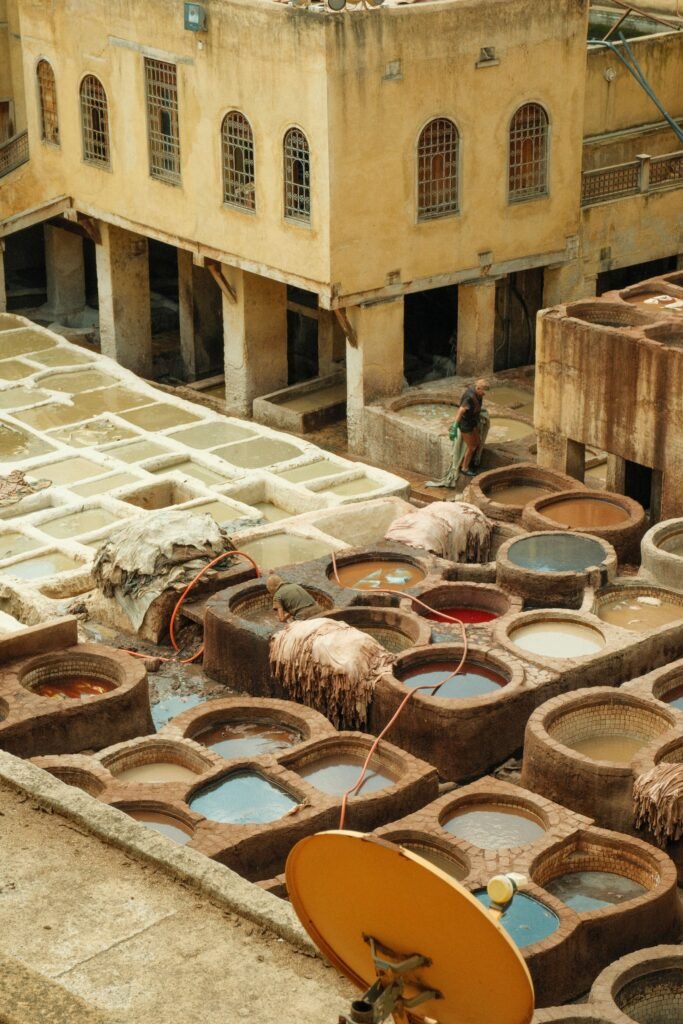
Hides arrive salted or dried and are first rehydrated in water. They then go into a lime and sulphide solution, which loosens the hair and opens the fibre structure. This is the stage that produces the pale, swollen skins seen hanging in tannery yards, and it can take several days.
2. Fleshing and unhairing
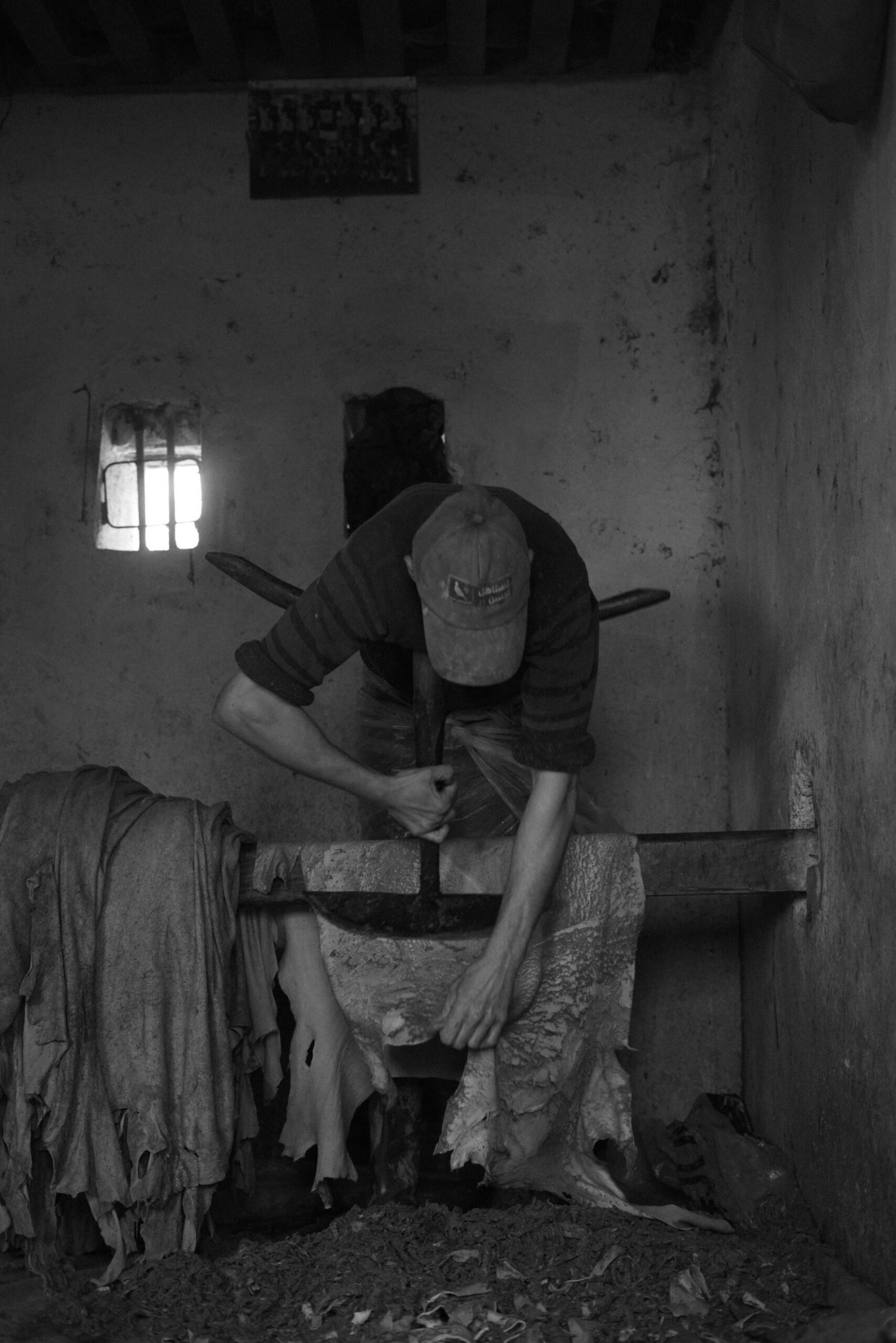
The hide is laid over a curved wooden beam and worked with a two-handled blade. The hair is pushed off one side, and the subcutaneous fat and flesh is scraped from the other. It is physically brutal work, and it is still done by hand in a traditional tannery because the blade has to follow the contour of the skin — a machine takes the same pressure everywhere and thins the hide unevenly.
3. Bating and pickling
Nothing in a traditional tannery is reversible, and this is the step where that matters most.
Enzymes remove the remaining unwanted proteins, and acid brings the hide to the right pH for the tanning agent to penetrate. Get this wrong and the tannin never reaches the core, which shows up years later as leather that cracks along fold lines.
4. Tanning
Two dominant routes:
- Vegetable tanning — tannins from bark, wood and leaves, in pits, over weeks or months. Produces firm, warm-toned leather that patinas, tools well and burnishes cleanly.
- Chrome tanning — chromium salts in rotating drums, in a day. Produces soft, supple, water-resistant leather that takes bright colour.
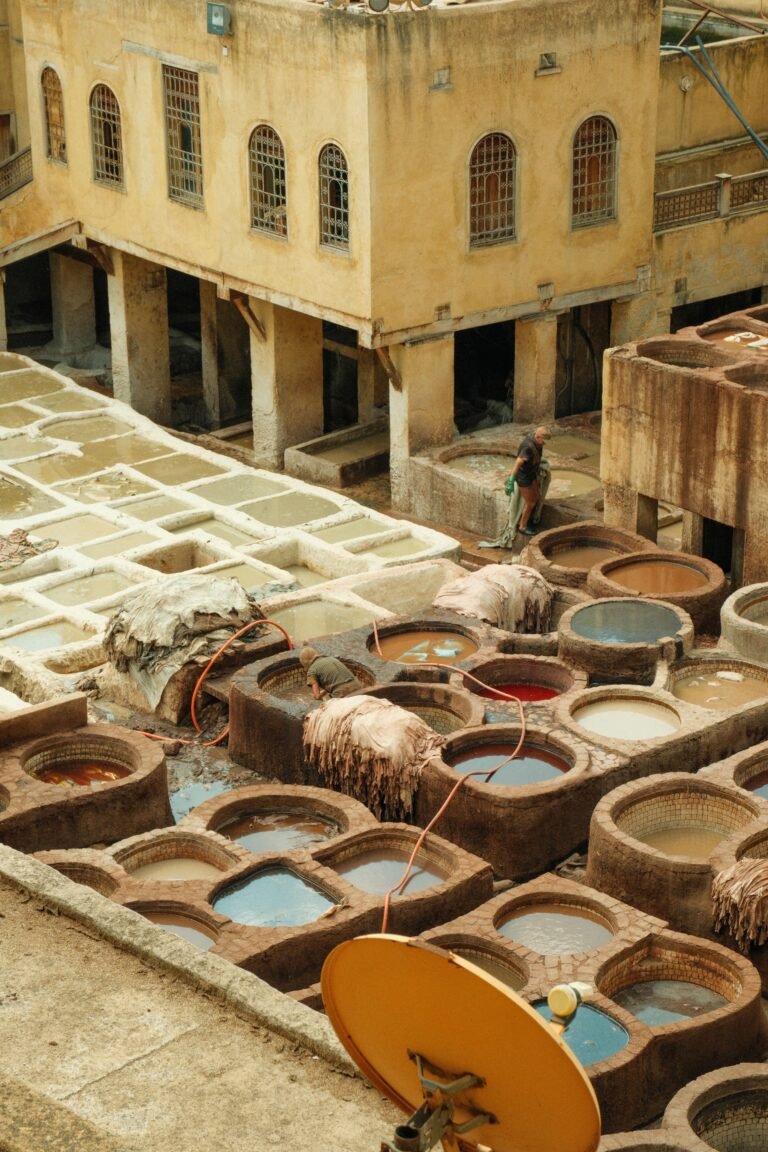
A traditional tannery works the vegetable route, and the pits are the reason it is slow. Hides move from weak liquor to strong over weeks so the tannin advances evenly through the fibre. Rushing it hardens the outside and leaves a raw core. Modern tanneries doing this under audited chemical and water management are listed by the Leather Working Group.
5. Drying, staking and finishing
The last stage in a traditional tannery is the one buyers actually see.
The leather is dried under tension, then softened mechanically by staking, then dyed, waxed or coated depending on the intended use. The colour stage decides more about the finished piece than most buyers realise — how the hide is dyed is what separates leather that develops patina from leather that scuffs.
Why the pits still exist
Drum tanning replaced pit tanning almost everywhere for good commercial reasons: it turns a hide into leather in a single day instead of two months, uses a fraction of the floor space, and gives a repeatable result batch after batch.
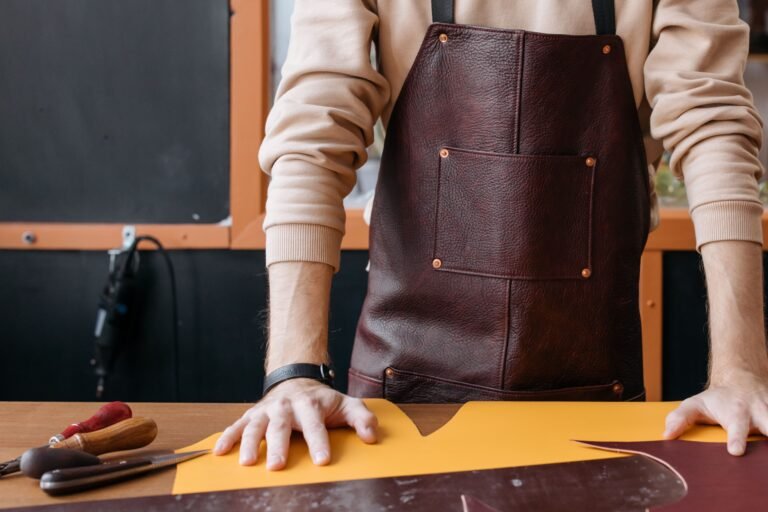
Drums are faster, cheaper and more consistent, so the obvious question is why a traditional tannery survives at all. The answer is the material it produces. Pit-tanned vegetable leather is firm enough to hold a carved impression, thick enough for saddlery and belts, and it burnishes to a glass edge. Drum-tanned chrome leather cannot do those things, which is why the hand tools of leatherworking are still built around pit-tanned hide.
What it means when you are buying
When a description says “full grain vegetable tanned”, it is describing weeks of pit work and a surface that has not been sanded or plasticised. When it says “genuine leather”, it is describing a legal minimum and nothing more. Our guide to spotting real leather shows how to check which one is in your hands, and the online buying checklist covers the questions to ask when you cannot.
Leather from a traditional tannery is also the easiest to keep. It responds to conditioning, takes repair well, and rewards attention — start with our leather care guides.