How to Spot Real Leather When Buying a Bag
Labelling on leather goods is loosely regulated in most markets, and the terms used are deliberately reassuring. “Genuine leather” sounds like a guarantee; it is closer to a loophole. Learning how to spot real leather — and which grade of it — takes about thirty seconds once you know where to look.
The grading, in plain terms
- Full grain — the complete outer surface, nothing sanded away. Strongest, ages best, most expensive.
- Top grain — the outer surface lightly sanded and refinished to remove blemishes. Good quality, more uniform, less character.
- Genuine leather — a legal term meaning only that some leather is present. Usually a lower split, often heavily coated.
- Bonded leather — leather scrap ground up and glued to a backing. It delaminates. Avoid it.
Those four words cover almost everything you will meet on a label. The distance between full grain and bonded is enormous — decades of use against a bag that flakes inside two years — yet both are sold as “leather”. That gap is the whole reason to know how to spot real leather yourself instead of trusting the tag.
How to spot real leather: six checks at the stall
- Look at the edge. Real leather has a fibrous, slightly fuzzy cross-section. Synthetic shows a uniform fabric backing under a plastic layer.
- Look at the pores. Genuine grain is irregular. If the same pore pattern repeats, it is printed.
- Press it with your thumb. Leather wrinkles and creases around the pressure and then relaxes. Synthetic dents and springs back flat.
- Smell it. Real leather smells of leather. Vinyl smells chemical, or of nothing.
- Check the hardware and lining. Cheap zips and thin polyester lining on an “expensive leather” bag is a mismatch that tells you what the maker prioritised.
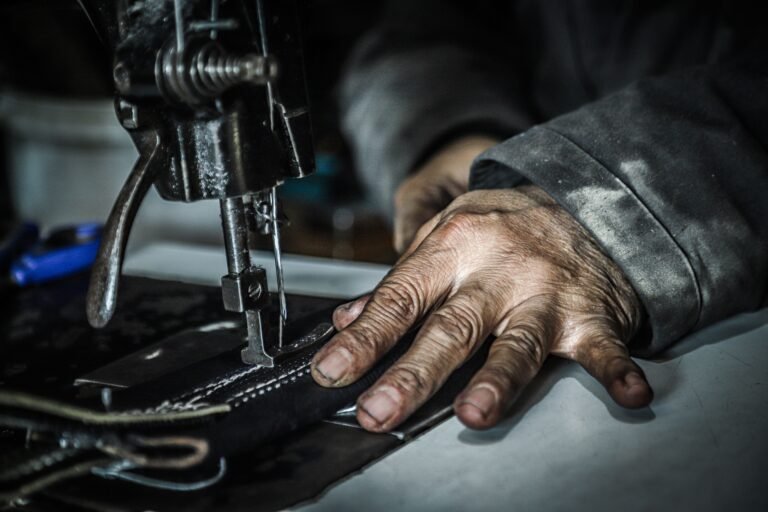
- Check the stitching. Even spacing, no loose ends, no skipped stitches, and thread that sits in the leather rather than on it.
That is how to spot real leather in under a minute. Do them in that order — the edge and the pores settle most cases before you have picked the bag up twice.
Two tests that mislead people
Two of the most repeated tips on how to spot real leather do not work the way people think.
The water drop. Untreated vegetable-tanned leather darkens as it absorbs a drop, so people assume anything that repels water is fake. It is not. Most finished and pigmented leather is sealed at the tannery and will bead water exactly like vinyl. The drop tells you about the finish, not the material.
The burn test. Skip it. It damages the item, no seller will allow it on the shop floor, and the edge and pore checks already give you the answer without setting fire to anything.
Ask where the hide came from
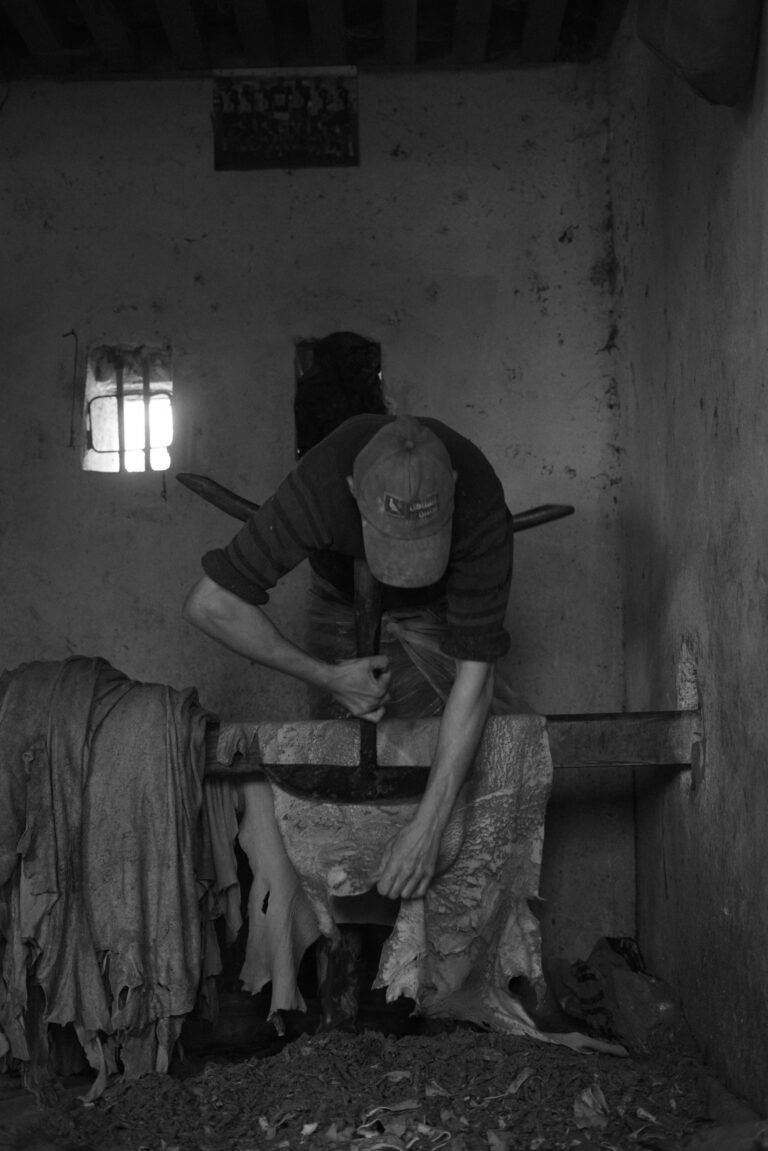
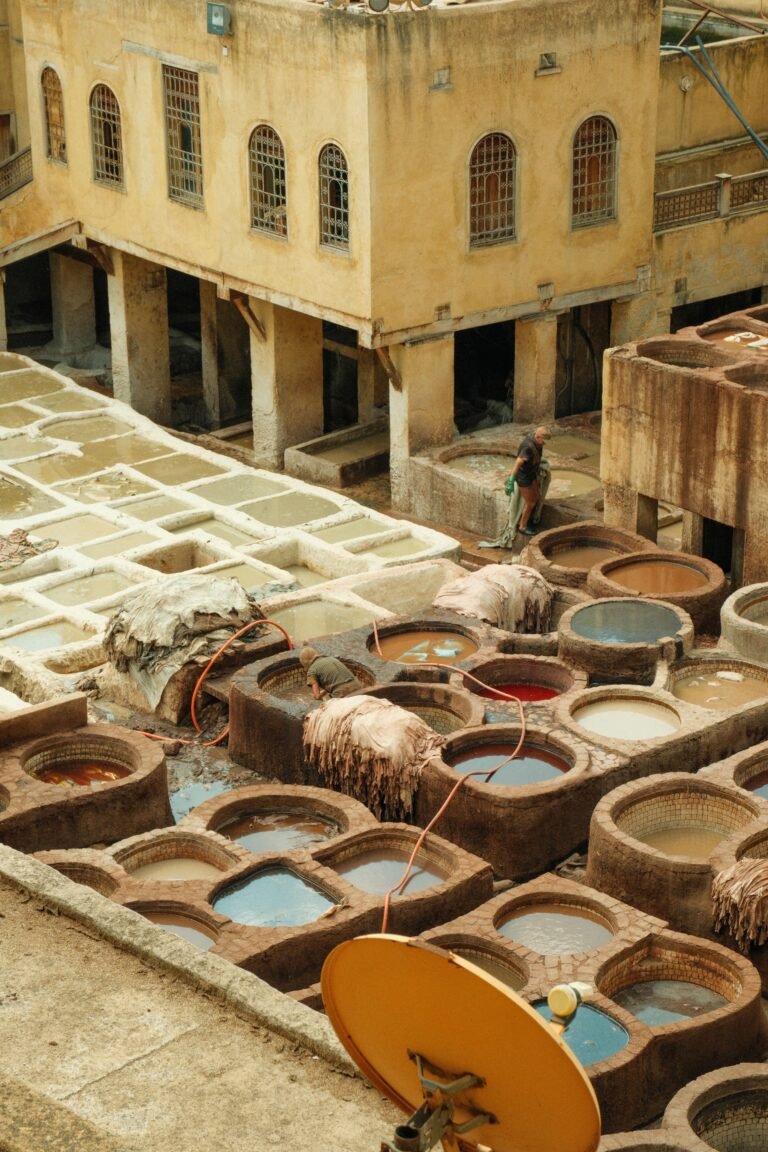
A seller who can name the tannery is usually selling something worth the price. Many established tanneries are audited by the Leather Working Group, and a named source beats every adjective on the label. If you want to see what that process actually involves, read what happens inside a traditional tannery — and how the hide was dyed, which decides whether scuffs blend in or stay visible for years.
Price sanity check
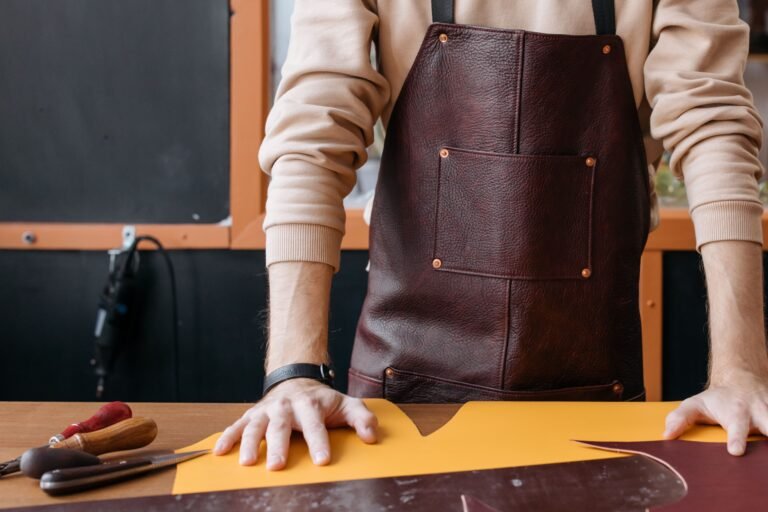
A full-grain bag needs several square feet of good hide plus hours of skilled labour. If the price is close to the cost of the hide alone, something in the description is not accurate. Work the other way too: a very high price proves nothing on its own, because a coated split in a well-known logo still costs more than an unbranded full-grain bag from a small workshop.
When you cannot touch it
None of these checks survive a screen. Online you are judging the seller’s information instead of the material, which is a different discipline entirely — our checklist for buying leather online covers what a listing has to state before it deserves your money.
Knowing how to spot real leather is only half of the purchase. Once the bag is yours, the material stops being the variable and maintenance takes over. Start with our leather care guides, and know in advance what a proper repair involves — on full grain, almost everything is fixable.